Where It All Started
Tobi was never the problem child in school. In primary school — I am talking Primary 4, Primary 5 — he was fine. Maths was not his favourite subject, but it was not a crisis either. He would bring home his books, do the work, and move on. Normal child. Happy child.
Then something shifted in JSS1.
His first junior secondary school Mathematics teacher was a man who believed in discipline through humiliation. I found out later what happened. Tobi raised his hand in class one day. He had thought through the problem, he had attempted the answer, and he was wrong. In front of the entire class, this teacher held up Tobi's work and said something like — "Look at this boy. JSS1 and he cannot even do this simple thing. What kind of primary school did you attend?"
The class laughed. Tobi did not raise his hand again for the rest of that term.
After that day, Tobi changed. He went quiet around numbers. Not quiet generally — he was still Tobi, still laughing, still playing football with his friends. But the moment Mathematics appeared, something shut down inside him. Like a light going off.
I did not notice it immediately. I am a working mother. I come home from the office tired. I am managing the house, managing my husband Kunle's schedule, managing the other two children. By the time I sat down with Tobi for homework, I was already running on empty.
The Nightly Battles
The homework sessions became our war zone. Not because either of us wanted to fight — but because fear and exhaustion, sitting across a kitchen table from each other, always end in conflict.
I would open the textbook. Tobi would look at it like it had personally offended him. I would explain the first step. He would look blankly at me. I would explain again. Then something would shift in me — not anger exactly, but something close to it. A frustration that came from love and desperation mixed together.
Why can he not get this? I have explained it four times. Is he not listening? Is he doing this deliberately?
I said things during those sessions that I am not proud of. Not cruel things. But impatient things. "Just think, Tobi. Use your brain." "Your classmate can do this. Why can you not?" Words that I meant to push him forward but that were actually pushing him further away from me.
He started avoiding me in the evenings. My own son. He would see me come in from work and find reasons to be in another room. When he absolutely had to sit with me for Maths, he would go through the motions — pencil moving, mouth saying yes Mummy, but nothing actually landing. We were two people going through performance, not two people learning together.
Our relationship was straining under the weight of this one subject. And I could feel it — the distance that was growing between us — but I did not know how to stop it.
The Report Card That Broke Me
Second term of JSS2. The report card came home.
I knew it was not going to be good. I had been bracing myself for weeks. But knowing something is coming does not always prepare you for the actual moment.
Mathematics: 24/100.
I sat in my car outside the school. I did not drive immediately. I could not. I sat there for almost twenty minutes, alone, with the report card on the passenger seat. And I cried. Not the quiet kind of crying — the ugly kind. The kind where you are not sure if you are crying for your child or crying because you feel like you have failed at the most important job of your life.
When I finally drove home, I went straight to the bathroom and washed my face. I did not want Tobi to see. I did not want Kunle to see. I just put the report card in my bag and made dinner and smiled at everyone at the table like everything was fine.
But inside me, something had cracked open. I cannot keep doing this. Something has to change. But what? I have tried everything I know how to try.
What My Mother Said
I told my mother what was happening. Not everything — but enough. She listened to me in the way only a mother can listen. Then she was quiet for a moment, and she said something that did not make sense to me at the time:
"Bimpe. You cannot teach a child who does not feel safe with you. Fix the relationship first. The Maths will follow."
I thought she was being too simple. The relationship? The relationship is fine. I love Tobi. Tobi knows I love him. What does the relationship have to do with fractions?
I thanked her, got off the phone, and went looking for another lesson teacher.
Everything We Tried — And Why None of It Worked
I need to be honest with you about what we went through. Because I know you have been down some of these same roads. And I do not want you to feel alone in this.
First lesson teacher. A young man who came highly recommended by a colleague at my office. He came three times a week — Monday, Wednesday, Friday — for four months. Tobi seemed okay with him at first. But the reliability was a problem from the beginning. He would cancel last minute. He would arrive late and leave early. His sessions with Tobi were basic — he mostly supervised homework rather than actually teaching. After four months, Tobi's result went up by exactly 6 marks. Six marks. I had paid over ₦80,000 for six marks. I stopped the arrangement.
Second lesson teacher. A woman this time, more consistent. She came when she said she would come. But she taught at a pace that was right for a child who had no fear — not for a child who had built walls around numbers. She moved too fast. She never communicated with me. She would sit with Tobi for an hour, come out, say "we covered everything," and leave. I had no idea what Tobi actually understood. After three months, his score improved slightly — from 24 to 31. But the fear in his eyes during homework was exactly the same. The numbers were changing but the child was not.
The lesson centre. One of the popular ones in our area of Ibadan. I thought: maybe a structured environment will help. Maybe being around other children who are learning will motivate him. I enrolled him and paid three months upfront. The first day I dropped him off and looked inside that room, I counted over forty children. One teacher. One board. Forty children at different levels. Tobi sat in the second row and from his posture alone I could see — he was already lost. He attended for eight weeks. He became more withdrawn, not less. He would come home from the centre quieter than when he left.
WAEC past question booklets. Every mother in Nigeria who has been through this knows the booklets. I bought three different ones. Different publishers, different years. I set them on Tobi's desk and told him we needed to practice. He opened the first one, stared at the first question for eleven minutes — I watched him — and then quietly closed it. He opened it one more time the following week, looked at it again, and pushed it away. He never opened it a third time. The booklets are still on the shelf.
Motivational YouTube videos. I found a channel someone recommended in a parenting WhatsApp group. A young American man explaining Mathematics in a very energetic way. I sat with Tobi and we watched three videos together. Tobi's comment after the third one stopped me cold. He said, "Mummy, these videos are not for us. That man does not know what Nigerian Maths is like." He was not being rude. He was telling me something true. The content was not his world. The faces, the accents, the examples — none of it landed.
Shouting. Begging. Threatening. I tried all three at different times. I am not proud of any of it. The shouting produced tears — his and mine. The begging produced temporary effort that evaporated within two days. The threatening — "If you do not pass this exam you will not attend your cousin's party, you will not use the phone, I will not buy you new shoes" — produced resentment. Visible, quiet, eight-year-old resentment. Each approach damaged something between us. And after every session that ended badly, I would lie in bed that night feeling like the worst mother in the world.
Six approaches. Hundreds of thousands of naira. Months of emotional energy. And we were exactly where we started — except now Tobi's relationship with Mathematics had a new ingredient added to it: shame.
The Naming Ceremony in Ogbomoso
It was a Saturday in May. My mother's cousin had a new grandchild, and there was a naming ceremony in Ogbomoso. The kind of gathering where you know only half the people there but the jollof rice is guaranteed to be excellent.
The hall was loud in that particular Nigerian way — the kind of noise that is warm rather than harsh. Women in matching aso-ebi fabric moving from table to table, babies being passed from arm to arm, music playing just below the threshold of too loud. The smell of jollof rice cooked over firewood, tomato stew, fried fish, puff-puff in plastic bowls covered with foil.
I was sitting in a corner by myself. I had a plate of rice in my hands that I was not eating. I had driven to Ogbomoso that morning to escape the week — but the week had come with me. Tobi's midterm result had just come back. Mathematics, 27 over 100. He was in JSS3 now. JSCE was approaching. WAEC was no longer an abstract future event — it was a real, ticking thing on the horizon.
I am going to watch my son fail Mathematics publicly, I was thinking. I am going to be the mother of the boy who failed Mathematics in WAEC. And I do not know what else to try.
I did not notice her until she was already sitting beside me.
Mrs Adunola. Seventy-one years old. One of those Nigerian women who carry their age like an outfit — with complete confidence. She had been my mother's oldest friend since their teaching days in Oyo State. She was known throughout their community as something of a legend. She had been a primary school headmistress for over thirty-five years. She had five children — all successful. Engineers, doctors, an accountant. The kind of children that made other parents sigh at naming ceremonies.
She set a plate of rice on the table in front of us, sat down beside me, looked at my untouched plate, looked at my face — and said:
"You have that look. The look of a mother carrying her child's problem alone. Talk to me."
I do not know why I told her everything. Perhaps because she was safe — old enough, experienced enough, outside my daily circle enough that there was no fear of judgment. Perhaps because I was simply exhausted from carrying it. Whatever the reason — I talked. She listened. She did not interrupt once.
The Method Mrs Adunola Revealed
When I finished, she nodded slowly. She was quiet for a moment. And then she said something I will never forget:
"We did not have all these lesson teachers and tutorial apps when we were raising our children. We had patience, we had presence, and we had a method. And every single one of my five children left this house knowing that Mathematics was their friend."
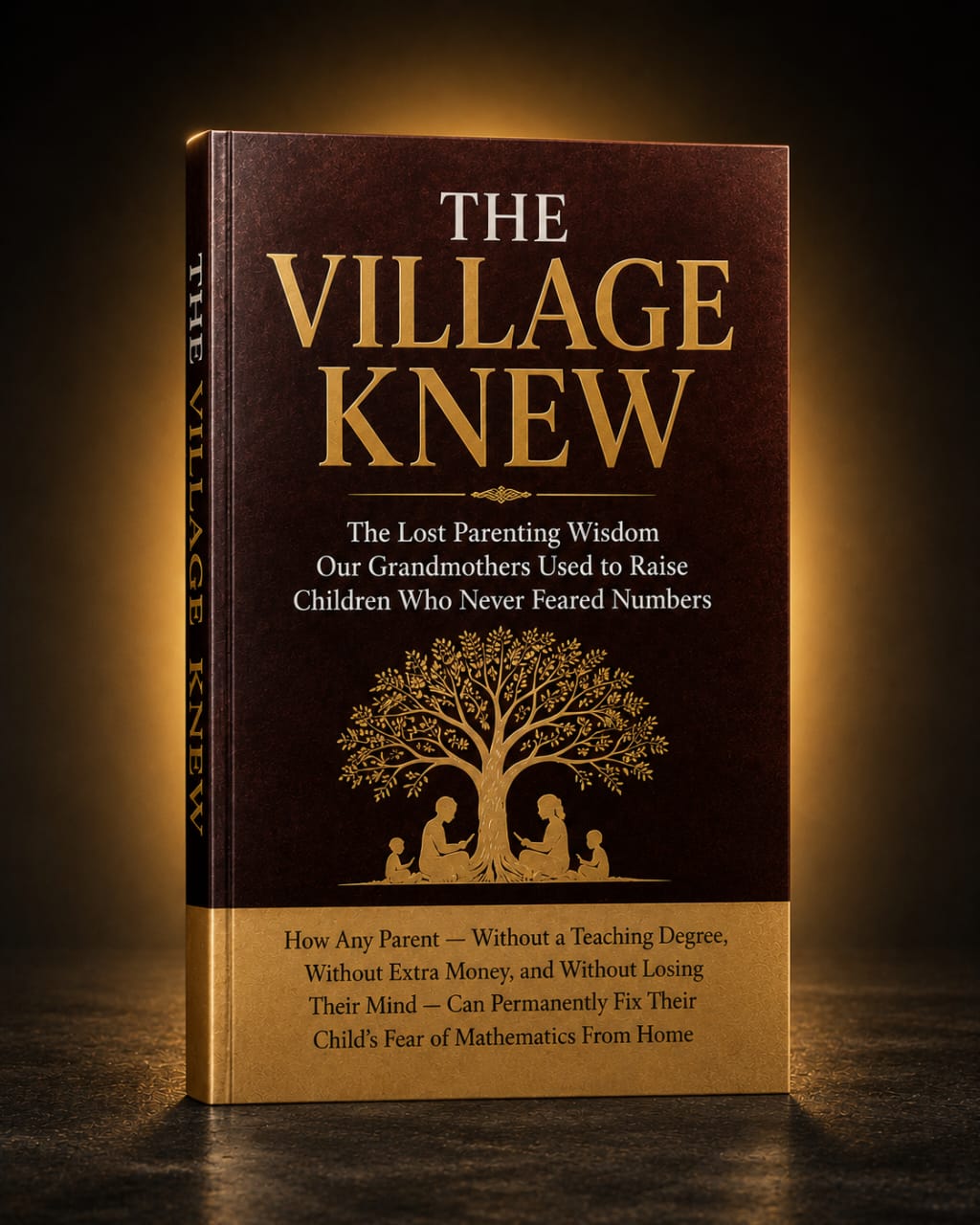
She called it The Village Way. She said it was not something she invented — it was something she had learned from watching how the older women in her community handled learning, combined with thirty-eight years of watching children in her school fail and succeed. She said the first mistake every modern parent makes is trying to fix the Mathematics before fixing the relationship around Mathematics.
She outlined five stages. Five clear, specific stages that any parent — no qualification needed, no Mathematics knowledge required — could begin in their own home that same evening.
Stage One is Reconnection. Before any textbook opens, you have a specific kind of conversation with your child. Not about Maths. About them. About how they feel. About what happened. This conversation follows a structure she gave me word for word.
Stage Two is Guaranteed Small Wins. You start with problems the child can solve. Not easy to adults — but genuinely achievable for that specific child right now. You engineer success deliberately. Because the brain, once it experiences success in Mathematics, starts to reclassify Mathematics as a space where success is possible.
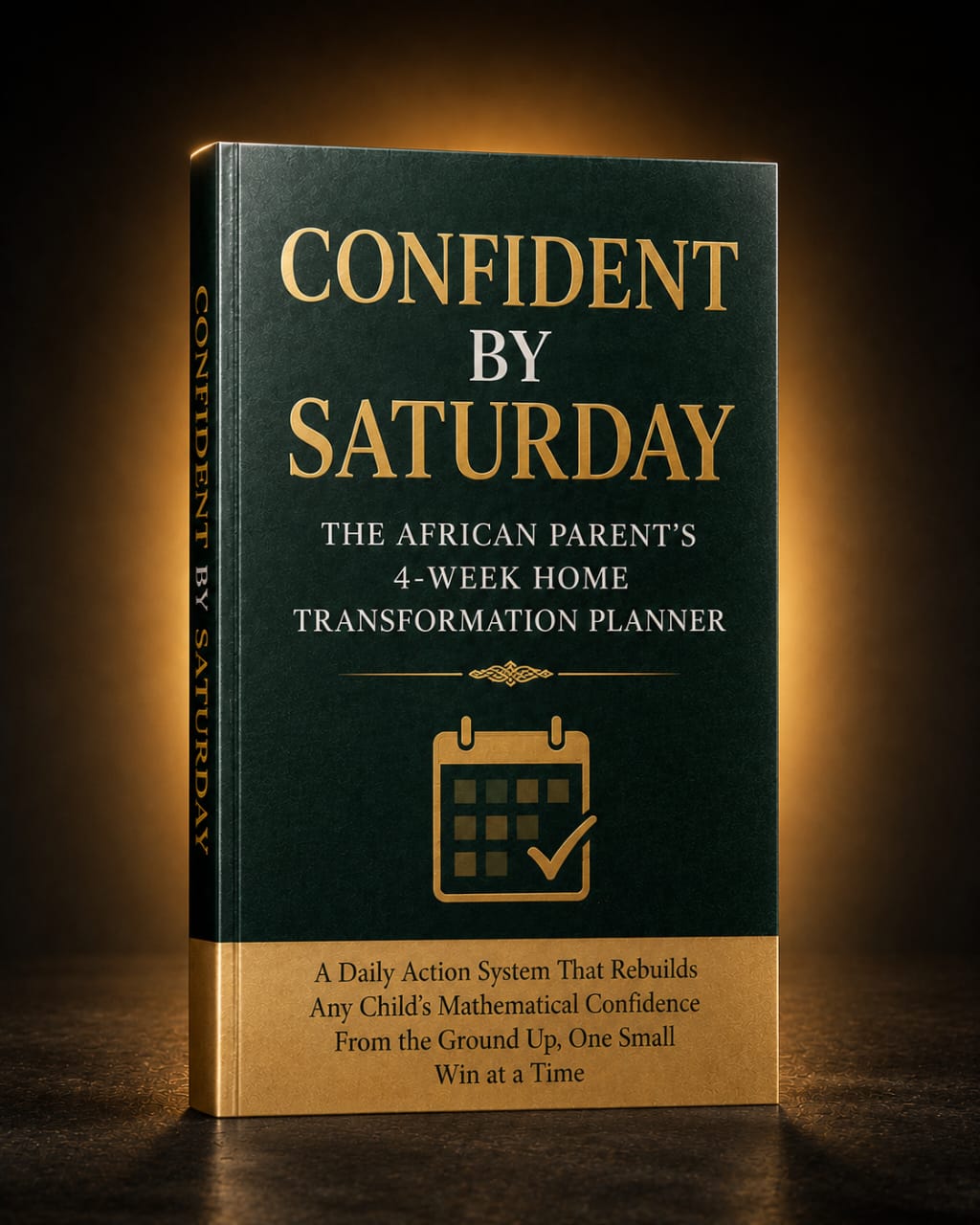
Stage Three is the 20-Minute Daily Practice Structure. Not weekend cramming. Not three-hour marathon sessions. Twenty minutes every single day, structured in a specific sequence. She showed me exactly how those twenty minutes should run.
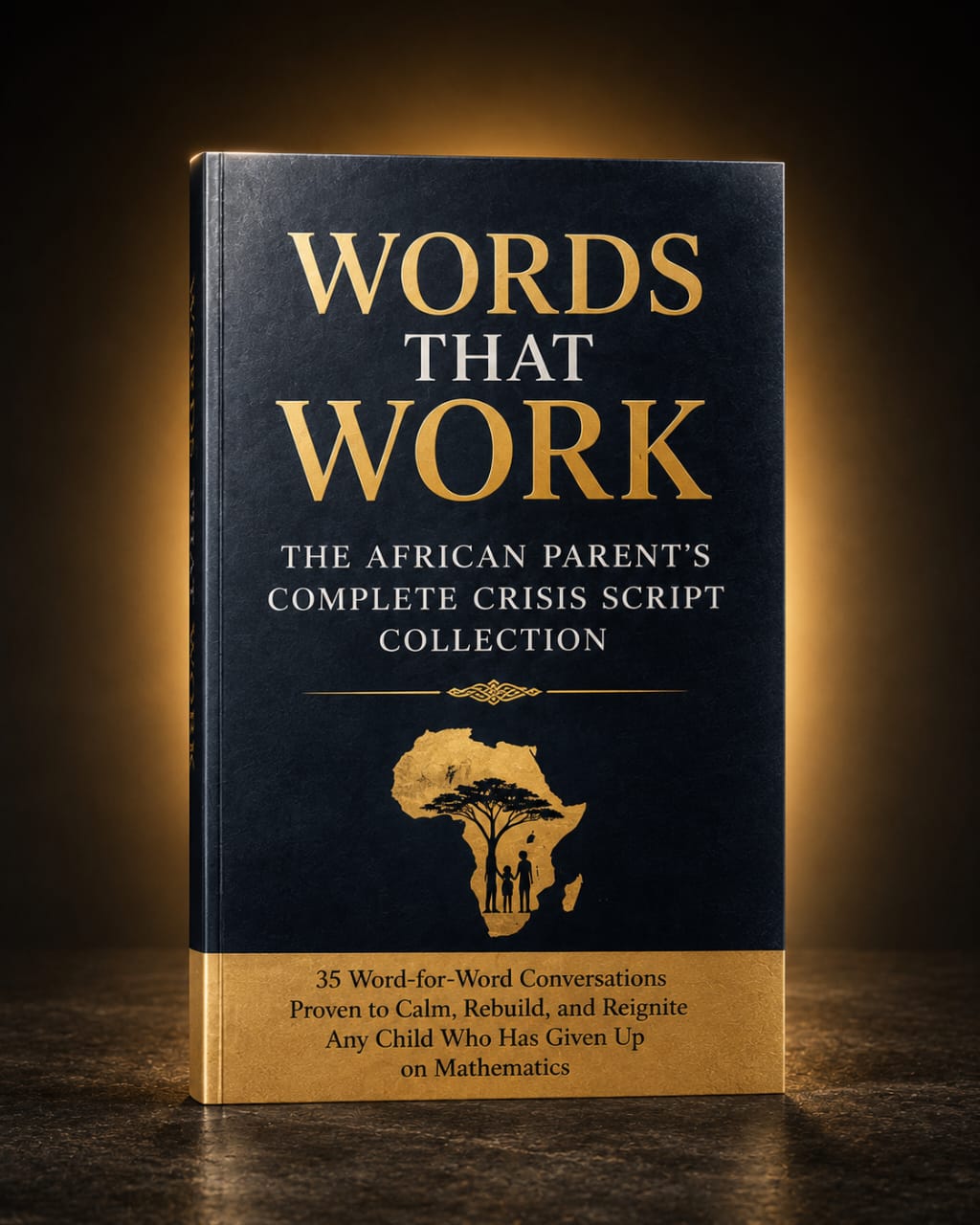
Stage Four is Language Reshaping. This is where you learn what to say — and what to stop saying — around your child's relationship with numbers. There are specific phrases that accidentally deepen fear. And there are specific phrases that quietly rebuild confidence. She gave me the exact scripts.
Stage Five is Handover. This is where, gradually, over weeks, you hand the ownership of learning back to the child. Where they begin to be the one who leads the session. Where Mathematics stops being something done to them and becomes something they do for themselves.
No shouting. No comparison. No pressure. Patient, structured love applied consistently over eight weeks.
She talked to me for almost two hours at that naming ceremony table. Jollof rice getting cold. Other guests moving around us. Mrs Adunola spoke slowly and clearly, the way a woman speaks when she knows exactly what she knows.
My Honest First Reaction
I drove home from Ogbomoso that evening with notes on the back of my receipt from the fuel station.
And I thought — this is too simple.
I had paid lesson teachers. I had enrolled in a lesson centre. I had bought books. And here was a 71-year-old woman at a naming ceremony telling me to have a conversation before doing Maths homework? Telling me to deliberately choose easy problems? Telling me to watch my words?
It cannot be that straightforward, I thought. If it were this simple, someone would have told me already. The lesson teachers would have known. The lesson centre would have known.
But I was out of options. And there was something about the way Mrs Adunola had said it — not with the enthusiasm of someone selling an idea, but with the quiet certainty of someone stating a fact they have witnessed many times — that made me think: what do I have to lose?
I decided to try it. Exactly as she described. For two weeks.
The First Few Days
The first three days were uncomfortable. Not because the method was wrong — but because Tobi did not trust it yet. He had been in defensive mode for so long that my new approach confused him. When I sat down with him differently — when I started the reconnection conversation instead of opening the textbook — he looked at me like I was playing a trick.
"Mummy, are we not doing Maths?"
"Not yet," I said. "Talk to me first."
He talked. Slowly at first. Then more. I listened without redirecting to the homework. And at the end of that conversation, I told him we would do just five Mathematics questions that evening. Five. Small ones. The kind I knew, from Mrs Adunola's guidance, that he could definitely solve.
He got them right. All five. I celebrated each one the way Mrs Adunola told me to — not over-the-top, not theatrical, but real. Specific. "You saw exactly where to put that number. That was clever."
He looked at me strangely. But he did not shut down.
Days four to ten were slow. Some evenings felt like nothing was changing. He still showed some resistance. I still had moments where I wanted to revert to my old way — to push harder, to show frustration. But I held the method. I stayed in Stage Two. Small wins. Specific praise. Twenty minutes and then we stopped — whether we were finished or not.
The Moment Everything Changed — Day 11
Day 11. A Tuesday evening.
I was in the kitchen making dinner. I had not called Tobi yet. I was letting the twenty minutes settle, thinking I would give him another fifteen minutes of rest before we began the session.
I heard a chair scrape across the floor in the dining area. I heard a book open. I heard — faintly — the sound of a pencil moving across paper.
I walked to the kitchen doorway and looked through.
Tobi was sitting at the dining table. By himself. No one had called him. No one had told him to sit down. He had opened his Mathematics textbook — voluntarily — and was working through a quadratic equation. Pencil moving. Lips pressed together in concentration. Completely absorbed.
I stood in that doorway and I did not move. I did not breathe loudly. I did not call his name. I just stood there, watching my son do Mathematics because he wanted to, and I felt something crack open inside my chest. Not in the painful way. In the way a seed cracks open when it is finally ready to grow.
He sat at that table for forty-two minutes. Alone. Without being asked. For the first time in over a year.
I went back to the kitchen and quietly thanked God.
What Kunle Said on Sunday Evening
By Week 4, Tobi's class teacher sent a positive note home. Three sentences. But three sentences I read five times.
The Sunday of that same week — family time in the sitting room. Television on. Kunle relaxing after a long day. The children around. And Tobi — without prompting, without asking permission, without being reminded — picked up his Mathematics textbook from the side table and opened it.
Kunle watched this for a few seconds. Then he turned to me slowly. He looked at Tobi. He looked back at me. And he said, in the quiet, completely serious voice of a man who cannot fully process what he is seeing:
"What did you do to this boy? This is not the same child."
I smiled. I said, "I will tell you later."
Later that evening, after the children were in bed, I stood alone in the kitchen and cried. Not from sadness. From relief. From exhaustion finally being allowed to release. From the specific joy of a mother who has been fighting quietly for two years and finally — finally — feels like herself again.
Three Other Mothers Who Used the Same Method
At that same naming ceremony in Ogbomoso, Mrs Adunola had spoken to two other mothers who were present and had heard us talking. A few weeks later, I reached back out to them to compare notes. And I found a woman in Nairobi through a mutual contact who had also received the same guidance from a similar source.
Here is what happened with each of them:
Mama Chidi — Port Harcourt, Nigeria. Her daughter Ada had been sitting at 31% in Mathematics in SS1. Mama Chidi followed the Village Way for one full term. No skipping. No shortcuts. She adjusted the language she used, restructured the homework sessions, implemented the small wins approach, and stayed consistent even on the days it felt like nothing was moving. End of term result: Ada scored 67%. One term. Same child. Same school. Same curriculum. Different approach at home.
Auntie Grace — Accra, Ghana. Her son Kwame had refused to open his Mathematics textbook for months. Not resistance exactly — complete refusal. Grace described sitting across from him and watching him go into what she called "the shutdown" — the point where the child simply leaves the room mentally even if their body remains. She began the reconnection stage first, as Mrs Adunola had described. After three weeks of the full method, Kwame opened his textbook on his own. Small thing. Everything.
Mama Amina — Nairobi, Kenya. She had twin boys — both sitting for KCSE Mathematics. Both had been failing. She thought the issue was double the problem because there were two of them. What she discovered was that once she addressed the emotional root of the fear — using the method — both boys responded. Not at identical speeds, but both responded. They both passed their KCSE Mathematics paper that year. For Mama Amina, a woman who had quietly accepted that her boys were simply not Mathematics children, this result was almost impossible to believe.
Three mothers. Three countries. Three children who everyone — including the parents themselves — had quietly started writing off. And the same simple method, applied with patience and consistency, produced results in every case.
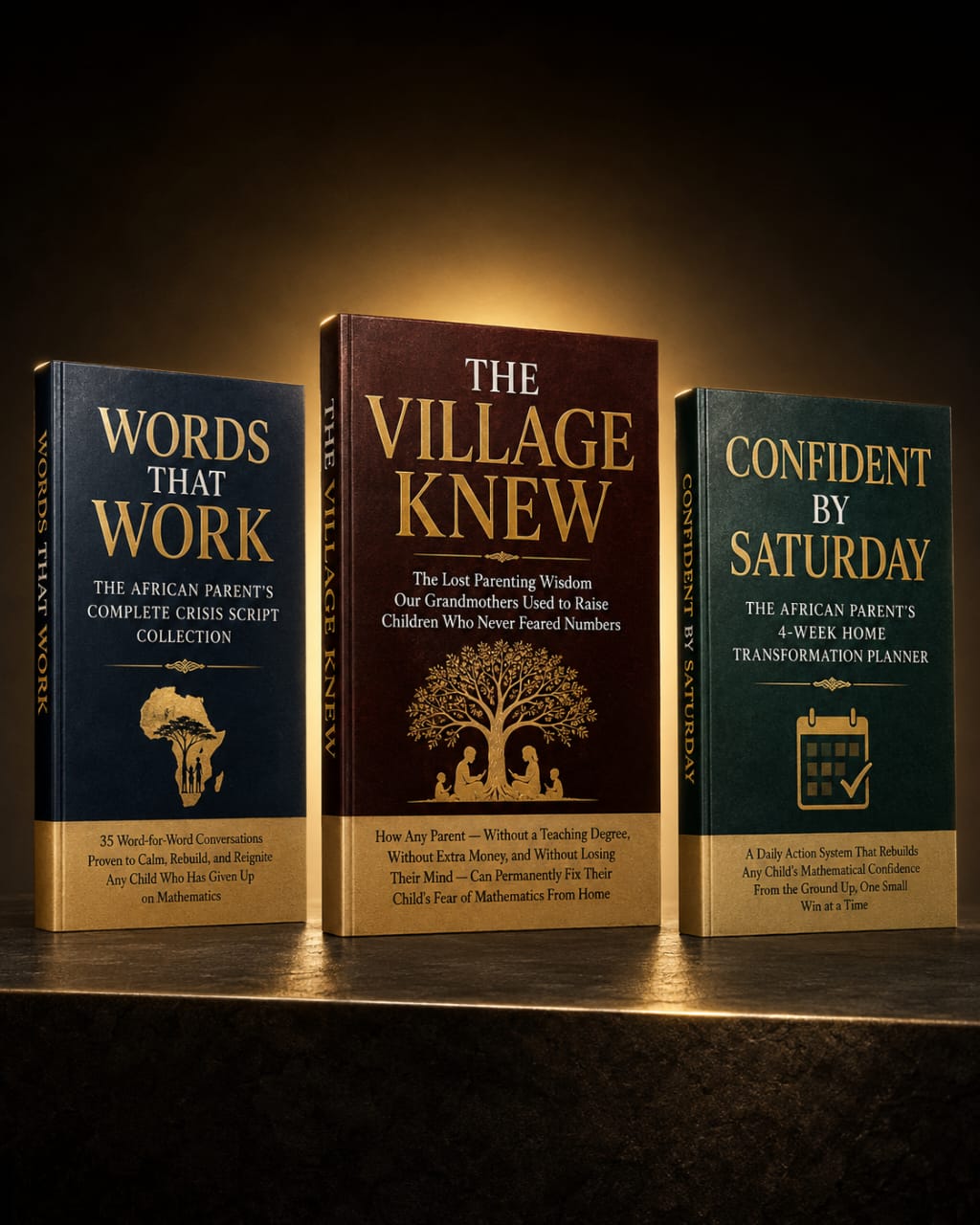
That is when I knew I had to share this properly. Not just with three people at a naming ceremony. With every African parent who is sitting at that kitchen table tonight, feeling helpless, wondering if their child will ever pass.
⚠️ This Discounted Offer is ONLY For the First 30 Buyers — So Please Act Now Before This Page Updates.


Share Your Experience
Have you used The Village Knew? Leave your story below for other parents to read.